Bonaire Yellow Stones: What Do They Mean? | Sunwise
Bonaire’s yellow stones point snorkelers and divers to safe spots and protect fragile coral reefs. Discover their significance, helpful tips for sustainable snorkeling and diving, and how you can contribute to the preservation of Bonaire’s unique underwater world.
Bonaire’s yellow stones are small, bright and instantly recognizable. You will see them along coastal roads, near shoreline access points and at well-known dive and snorkel sites. Some stones show the name of a dive site, while others mark where to enter or exit the water safely. This guide explains what the yellow stones mean, why they matter for divers and snorkelers, and how to use them while helping protect Bonaire’s fragile coral reef.
What are Bonaire’s yellow stones?
Bonaire’s yellow stones are practical markers. They help you recognize dive and snorkel sites and, in many places, point you toward the safest route into or out of the water. Their bright yellow color and black lettering make them easy to spot, especially when you are driving along the coast.
For visitors, the stones are useful. For the reef, they are even more important. They guide divers and snorkelers toward established entry and exit points, reducing the chance that people walk over shallow coral or damage sensitive parts of the reef.
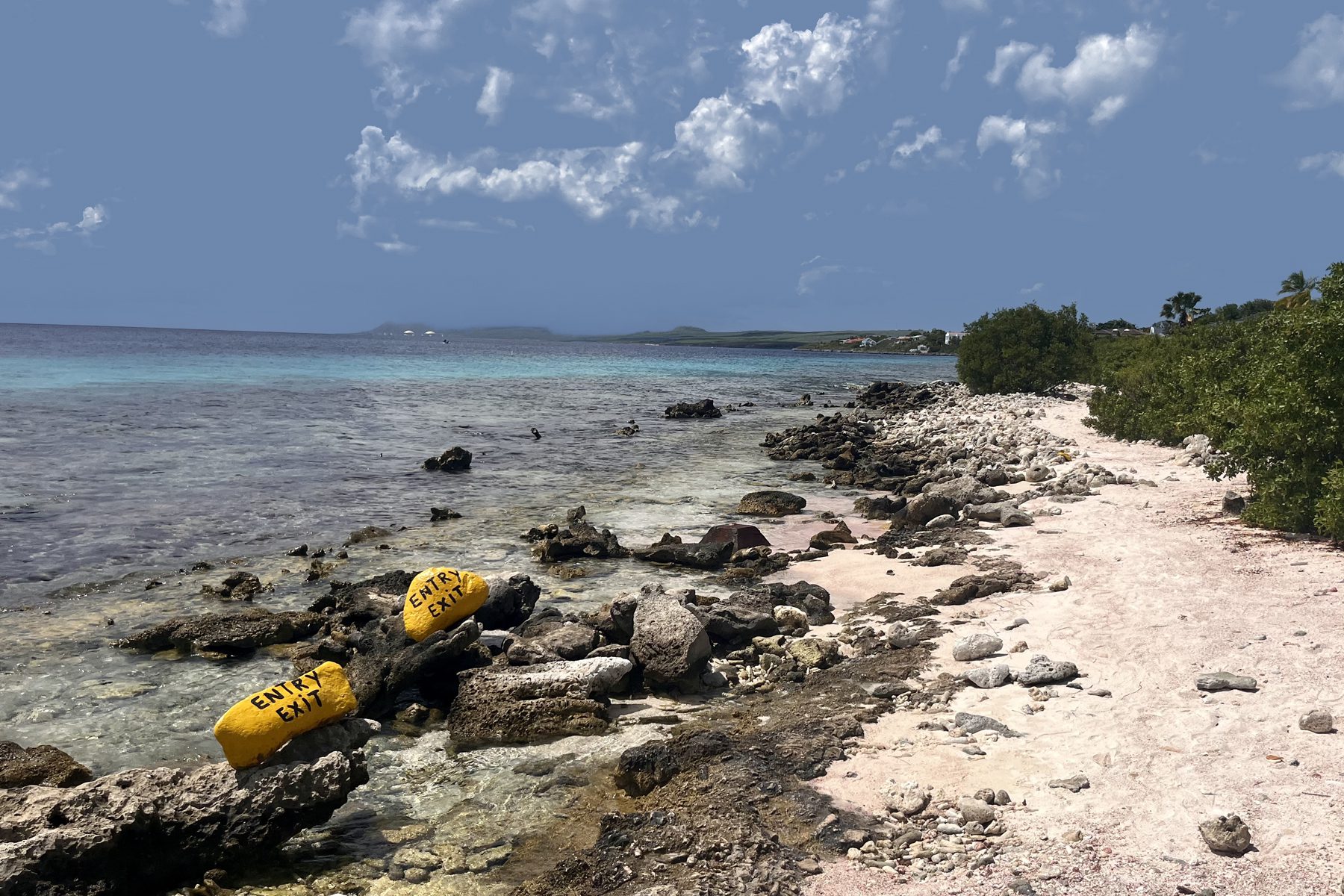
Yellow stones by the water: Entry and Exit
Along the shoreline, you will often see yellow stones marked Entry and Exit. These show where it is best to walk into and out of the water. That is helpful for your own safety, especially near rocky shores, loose stones or light surf.
The markers also help protect the coral. Coral reefs are home to fish, sea turtles, octopuses and many other marine animals. As an ecosystem, they are resilient, but they can be damaged by direct physical contact. One careless step on living coral can have more impact than it seems.
If you are snorkeling somewhere new, look for the yellow Entry and Exit stones first. Also check the water conditions, and when in doubt, choose a dive shop, guide or calmer site with a clearly marked entry point.
Yellow stones along the road and at dive sites
Many roadside yellow stones display the name of a dive or snorkel site. Well-known examples include Salt Pier, Hilma Hooker, 1000 Steps and Andrea I. They make it easier to find the right turn or parking area, especially when you are exploring independently by rental car.
That is one of the reasons the stones are so valuable for shore diving on Bonaire. You drive to the coast, look for the yellow stone, check the conditions and decide whether the site fits your experience and plans. If you are new to diving on Bonaire, a local briefing is still strongly recommended.
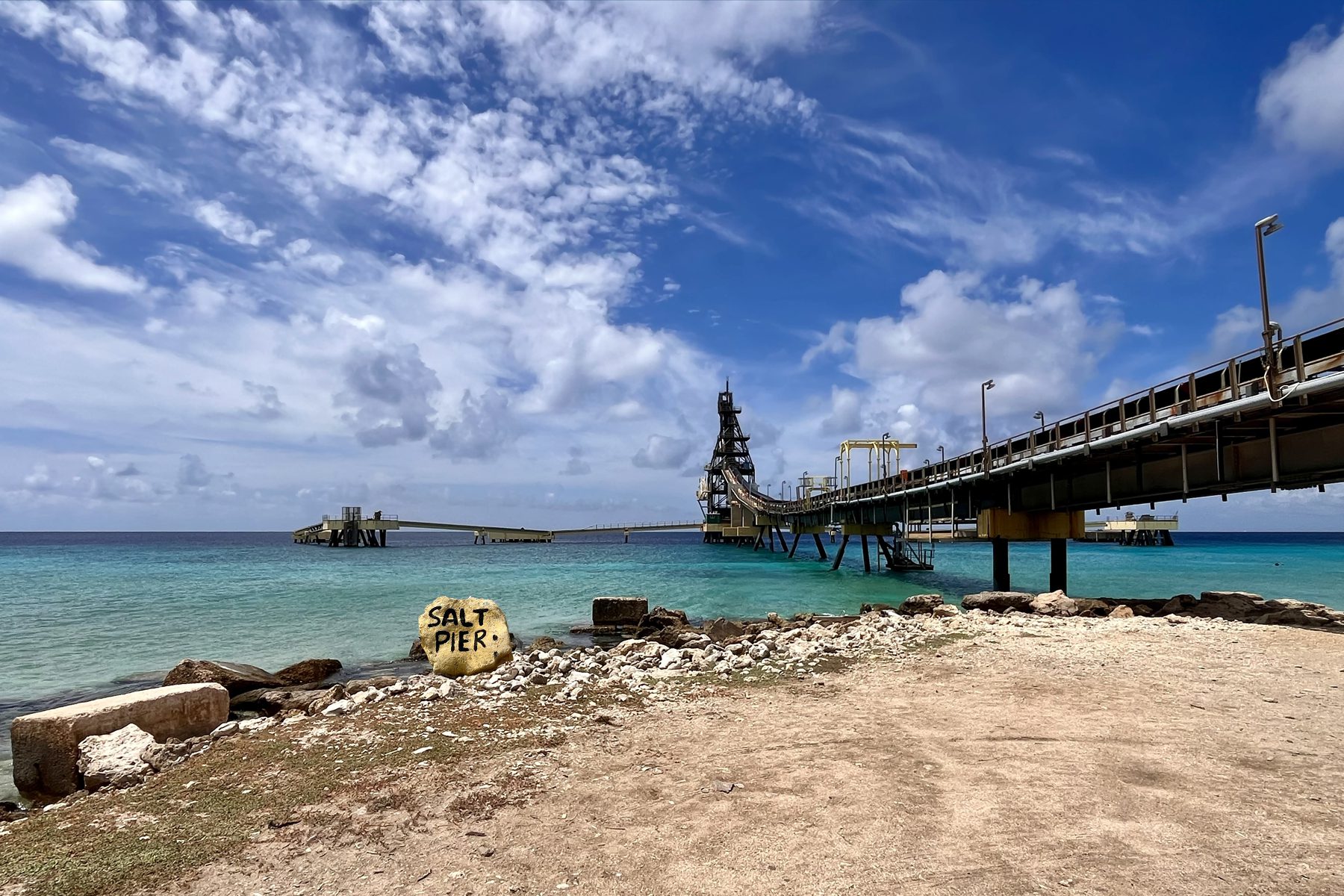
Famous yellow stones on Bonaire
Some yellow stones have almost become landmarks of their own. Salt Pier is known for its pier, clear water and striking underwater structure around the pillars. Hilma Hooker marks a popular wreck dive at a cargo ship resting at depth. 1000 Steps is known for the stairway down to the shore, the view and its mix of snorkeling, diving and photography.
The popularity of these places does not mean every site is suitable for every visitor. Pay attention to waves, current, entry conditions, depth and your own experience level. A yellow stone helps you find the location, but it does not replace good preparation.

How to help protect the coral
The yellow stones are a simple reminder of something bigger: Bonaire is loved for its underwater world, and that underwater world depends on careful behavior. Follow the marked entry and exit points, stay away from living coral and avoid touching anything underwater.
Use reef-friendly sunscreen when possible, wear water shoes where they are practical and safe, and keep a respectful distance from marine life. If you are diving, make sure your buoyancy is under control and that your fins, camera or gear do not drag across the reef.
A small choice at the shoreline can make a real difference. By following the yellow stones, you make your own snorkel or dive experience safer and help keep Bonaire’s reefs healthy for future visitors.
The role of STINAPA
The Bonaire National Marine Park is managed by STINAPA Bonaire. This organization protects Bonaire’s nature, including the marine park around Bonaire and Klein Bonaire. A Nature Fee is required for users of the marine park.
The yellow stones fit into that wider care for nature and access. They make dive and snorkel sites easier to recognize and help visitors treat the coast and reef more responsibly.
Staying close to Bonaire’s dive sites
If you want easy access to dive and snorkel sites during your vacation, it helps to think carefully about where you stay. Some accommodations are especially convenient for well-known dive sites, coastal roads or quieter shore entries.
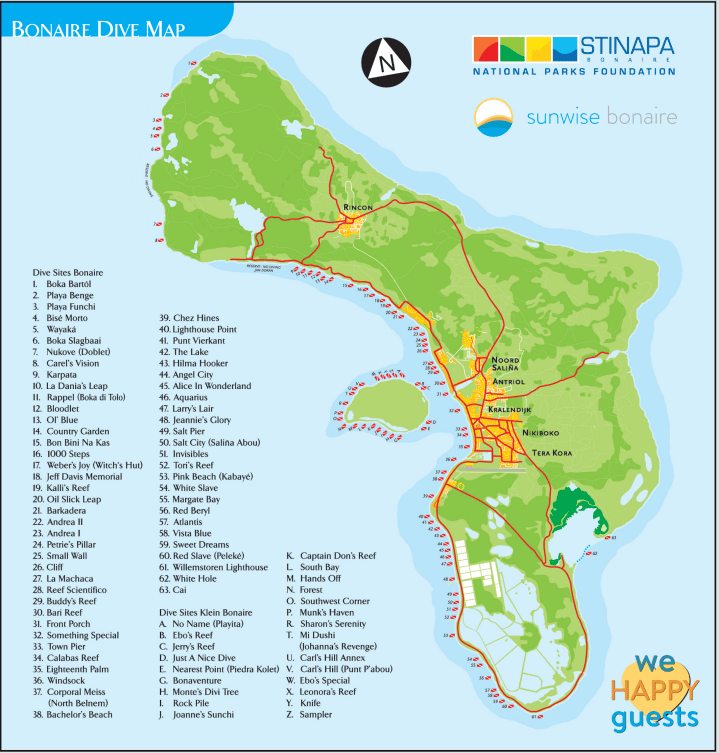
Explore our oceanfront villas or browse all Bonaire vacation rentals. Still comparing areas and dive spots? Use our map of Bonaire dive sites to plan your stay around the places you want to visit.
Frequently asked questions about Bonaire’s yellow stones
What do Bonaire’s yellow stones mean?
The yellow stones mark dive and snorkel sites or show where to enter and exit the water safely. Roadside stones often display the name of a dive site, while shoreline stones may be marked Entry or Exit.
Are the yellow stones only for divers?
No. They are also useful for snorkelers, photographers and visitors exploring the coast. The Entry and Exit stones are especially helpful for anyone who wants to access the water in a safer and more reef-friendly way.
Who manages the marine park on Bonaire?
The Bonaire National Marine Park is managed by STINAPA Bonaire. A Nature Fee is required for users of the marine park.
Can I dive independently using only the yellow stones?
Experienced certified divers can plan many shore dives independently, but the yellow stones are not a replacement for dive experience, local information or a proper briefing. Always check the conditions and ask a dive shop for advice when in doubt.
Where can I find a map of Bonaire dive sites?
You can use our overview of Bonaire dive sites. Local dive shops can also give practical advice about entry points, current, experience level and safety at specific locations.