Bonaire history
When you drive around Bonaire, you only notice much of its history once you start looking: a coral stone wall along a kunuku, a row of low huts near the salt pans, an old anchor on the seabed. On this page we list the most important Bonaire historical sites, so you can visit them yourself during your holiday.
We live and work on the island, and we regularly send our guests to these places. So we keep it practical: a short story per theme, an overview and pointers for anyone who wants to dig deeper. The full story is in our blog History of Bonaire: a fascinating journey through time.
Bonaire historical sites at a glance
These are the Bonaire historical sites we recommend most often. They are spread across the island, so you can combine them with a snorkel day or a drive through the north.
- Slave huts at the salt pans: low stone huts in the south, near Witte Pan and Rode Pan. They are a reminder of the hard labour of enslaved people in salt production.
- Obelisks along the south coast: coloured stone pillars that once guided ships to the right loading spot for salt.
- Fort Oranje in Kralendijk: a small fort on the waterfront, with cannons that still point out to sea.
- Willemstoren lighthouse: the oldest lighthouse on the island, on the southern tip near Lacre Punt.
- Rincon: the oldest village on Bonaire, in a valley in the north and for a long time the centre of the island.
- Rock paintings at Onima: drawings by the first inhabitants on limestone along the northeast coast.
- Shell mounds at Lac Bay: mounds of empty conch shells, known locally as karkó, left behind by generations of fishermen.
- Plantation houses and kunukus: old country houses and fenced gardens inland, often with stacked coral stone walls.
Salt, sea and trade: the past along the coast
For centuries, the economy of Bonaire revolved around salt. Seawater evaporated in the pans in the south, after which workers harvested the salt by hand and carried it to the shore. Enslaved people did this work, under harsh conditions and in the sun.
The slave huts along the south coast show that past without embellishment. Workers slept here during the week, far from their families. At weekends, they often walked back to Rincon. If you visit the huts, take a moment to consider what they stand for. Nearby are the obelisks that once told skippers where to collect their cargo.
In the capital, the link with sea and trade is just as visible. Old buildings from the colonial era stand around Fort Oranje and the waterfront. You can read more about the town on our page about staying in Kralendijk.
Underwater, old anchors and other traces of centuries of shipping lie on the seabed. They are part of the protected marine park that STINAPA manages. So take nothing and touch nothing, even if an object looks abandoned.
The first inhabitants and what they left behind
Long before European ships reached the island, the Caquetío lived here. They came by canoe from the South American mainland and lived from fishing, gathering and small scale farming.
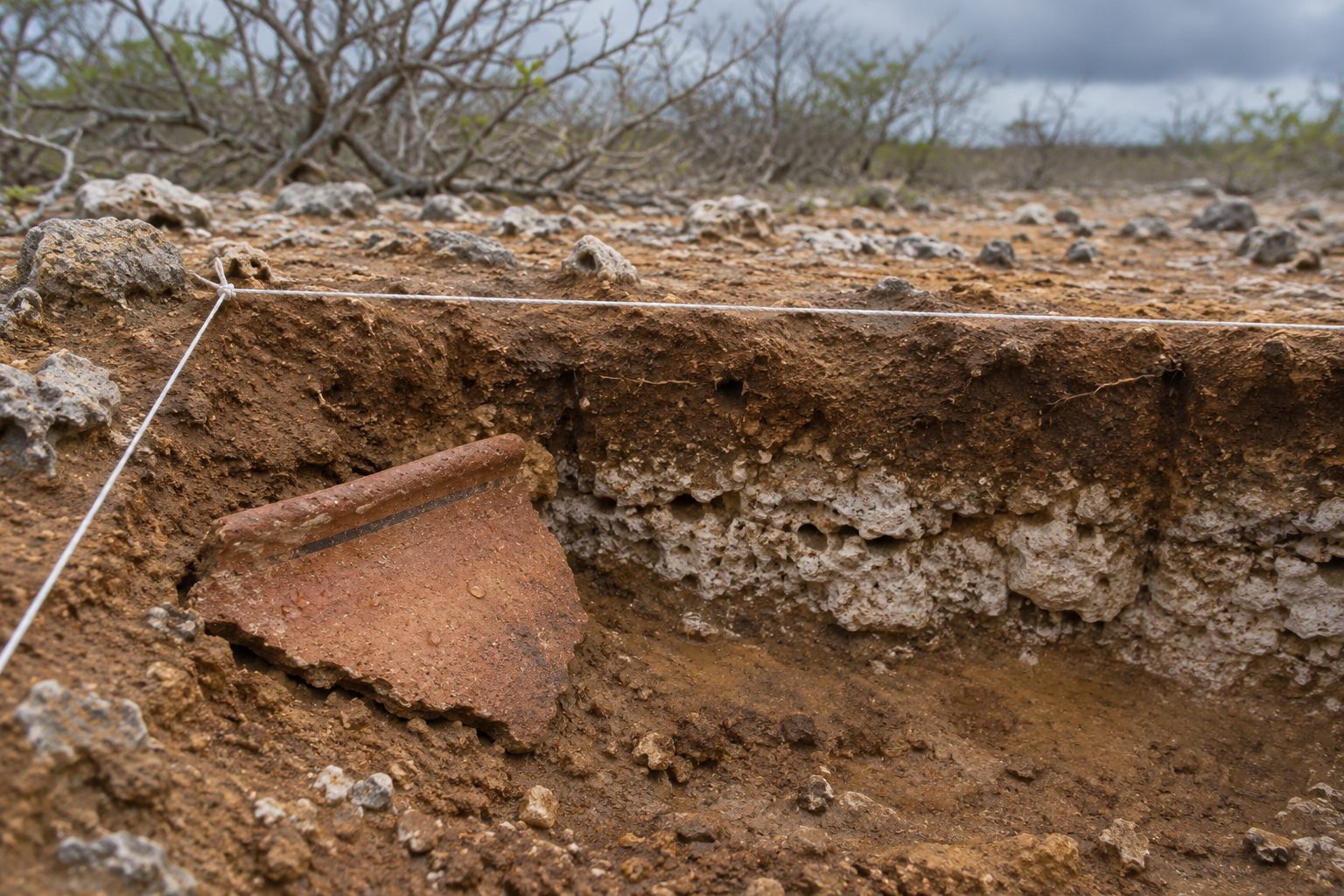
Few of their traces remain, but you can still find them. At Onima and a few other spots in the north, there are rock paintings in red tones. Archaeologists also find shards of old pottery during excavations, which show how these people cooked and lived. At the paintings, look with your eyes only: touching them causes permanent damage.

Fishermen, kunukus and the countryside
Inland, families built a life with very little. Rincon is the best example. Around the village there are still kunukus, small farmsteads surrounded by stacked coral stone walls. These walls kept goats out and protected scarce crops.
On the east coast, fishermen made their living from the sea. At Lac Bay they cleaned conch and left the shells behind, and over generations these piled up into entire shell mounds. If you would like to stay in this area, take a look at accommodation around Lac Bay.
Holidays that celebrate the past
Not all of Bonaire’s heritage is made of stone and shell. During local holidays, islanders pass it on through music, dance and storytelling.
- Dia di Rincon: the oldest village celebrates on King’s Day with music, food and parades.
- Simadan: the traditional harvest festival, with songs and dances passed down from generation to generation.
- Dia di Boneiru: Bonaire Day, focusing on language, culture and identity.
- Flag Day: read more in our blog about Bonaire Flag Day and cultural heritage.
Frequently asked questions
Which historical sites can you visit on Bonaire?
Among others: the slave huts and obelisks in the south, Fort Oranje in Kralendijk, the Willemstoren lighthouse, the village of Rincon, the rock paintings at Onima and the shell mounds at Lac Bay.

How do you visit sites linked to slavery respectfully?
Treat the slave huts as a memorial. Do not climb on them, leave no litter and take time to read about what happened there. Photos are fine, but avoid casual poses.
Where can you read more about the history of Bonaire?
The full story, from the first inhabitants to today, is in our blog History of Bonaire: a fascinating journey through time.
When do locals celebrate Dia di Boneiru?
Dia di Boneiru falls on 6 September each year. On that day, cultural activities take place all over the island.
Staying close to Bonaire heritage
Still deciding on your base? In our guide on where to stay on Bonaire, we compare the different parts of the island. Then browse our holiday houses on Bonaire and pick a base from which to visit the Bonaire historical sites at your own pace.